









Mobile App Development for Teams Who Have to Live With the App Afterwards
An app is not a project that finishes. It is a thing you now maintain against two operating systems that update every year, two review processes that change their minds, and users who uninstall silently.
We build accordingly: one codebase where that makes sense, native where it genuinely does not, crash reporting from day one, and a release pipeline your own team can run without us.
Product goals, APIs and device capabilities go into the build. iOS and Android releases, offline sync and crash analytics come out.
One codebase where it makes sense, native where it genuinely does not. A release pipeline your own team can run without us. Crash reporting is live from the first build, not after launch week.
Trusted by teams at
Fifteen years, 1,700 projects, and delivery hours covering Pacific through GMT.


From Two Divergent Codebases to One App You Can Actually Maintain
As a mobile app development company, we find the build is rarely the expensive part. These are.
Store rejection nobody planned for
A rejection on privacy labels, account deletion or subscription rules adds one to three weeks at exactly the point where a launch date has been promised to someone senior.
Two codebases, two backlogs
Native iOS and native Android built separately, then every feature specified twice, built twice, tested twice and out of sync by the third release.
No idea why users leave
Downloads look fine, retention does not, and there is no funnel instrumentation to explain the gap. The app is judged on a number nobody can decompose.
Only tested on new phones
Built and demoed on the latest hardware, shipped to an audience on three-year-old mid-range Android devices where it is slow and drains battery.
An API that was not designed for mobile
A backend built for a web app, so the phone makes eleven calls to render one screen, and the experience falls apart the moment the signal does.
Nobody owns releases
Certificates expire, the developer account is in someone's personal name, and the person who knew the signing process has left. This is more common than it should be.
Notice how few of these are about writing the app. Most of the cost and most of the risk in mobile sits either side of the build, which is why our discovery week spends as much time on release process and analytics as on features.
Comprehensive Mobile App Development Services for Scalable Growth
Consumer apps, field tools and enterprise apps that never see a public store.
Cross-platform apps
React Native or Flutter for the large majority of projects. One codebase, one backlog, near-native performance, and roughly 40 percent less to build and maintain than two native apps. We will tell you when your project is one of the exceptions.
What you get
- One codebase, both platforms
- Shared design system
- Over-the-air updates for JS changes
Native iOS and Android
Swift and Kotlin where the app genuinely needs it: heavy graphics, complex camera or sensor work, tight platform integration, or sustained background processing. Fewer projects than vendors claim, but they exist.
What you get
- Swift and Kotlin, current SDKs
- Platform-specific UX conventions respected
- Full access to device capabilities
Offline-first field apps
Apps for inspectors, engineers, drivers and warehouse teams who work where signal does not reach. Local-first data with conflict resolution designed properly rather than last-write-wins and a shrug.
What you get
- Local-first storage and sync queue
- Conflict resolution you have signed off on
- Works fully offline, syncs when it can
Enterprise and internal apps
Distributed through MDM, Apple Business Manager or Play Managed Google Play rather than a public store. SSO, device policy compliance and no App Review to plan around.
What you get
- MDM and enterprise distribution
- SSO via Okta or Entra ID
- Device policy and remote wipe support
AI features on device and in the cloud
Voice input, on-device vision, smart search and drafting. On-device where privacy or latency demands it, cloud where the model needs to be bigger, decided per feature rather than as a platform bet.
What you get
- On-device inference where it fits
- Streaming responses for perceived speed
- Cost per request tracked from day one
Store submission and release ops
Privacy labels, data safety forms, subscription configuration, screenshots, staged rollouts and the CI pipeline behind them. We get it through review and then hand you a process your own team can run.
What you get
- First submission handled end to end
- Automated build and release pipeline
- Certificate and account ownership in your name
-
01
Release targets
- App Store
- Google Play
- TestFlight
- MDM / enterprise
- Staged rollout
-
02
Shared codebase
- React Native
- TypeScript
- Design system
- Navigation
- OTA updates
-
03
Device layer
- Camera
- GPS
- Push
- Biometrics
- Offline store
- On-device AI
-
04
Backend
- Your API
- Auth
- Sync engine
- Analytics
- Crash reporting
AI in mobile, where it actually helps
Mobile is where AI features either feel magical or feel like a spinner. The difference is almost always latency and placement rather than model quality.
- Voice and natural input Typing on a phone is the worst input method most of your users have. Voice input with on-device transcription removes the friction entirely for field apps, note-taking and search, and it works without a signal.
- On-device vision Document scanning, barcode and label reading, damage assessment, condition capture. Running locally means it works offline, costs nothing per use, and no image leaves the device, which usually settles the privacy conversation before it starts.
- Search that understands intent Small screens punish bad search harder than desktop does, because there is no room to browse past a wrong result. Semantic search over your content is one of the cheapest retention improvements available on mobile.
- AI-assisted build We use AI tooling for boilerplate, tests and platform migrations, which cuts 20 to 30 percent of the mechanical effort. You see that as a shorter timeline. Every line still gets read by a senior engineer before it merges.
On-device versus cloud is a per-feature decision, not a platform strategy. Voice transcription on-device, complex reasoning in the cloud, and a fallback path for both. Any vendor pitching you one answer for the whole app has not thought about it properly.
Industries We Serve
We partner with diverse industries to provide scalable software solutions that deliver measurable outcomes.
Healthcare
From HIPAA-compliant patient portals to telemedicine platforms and EHR integration, we build healthcare software that improves care delivery and keeps patient data safe. Privacy, security and usability are designed in from the start.
Finance
Security and compliance are non-negotiable here. We build fintech products with KYC, AML and regulatory safeguards built in, while keeping payments and account journeys fast and straightforward for the end user.
E-Commerce
We create scalable commerce platforms that turn visitors into repeat buyers. Custom storefronts, secure payment gateways, inventory and returns handling, all built to hold up through peak season rather than only in January.
Education
Whether it is an LMS, a virtual classroom or interactive learning tools, we build platforms that keep learners engaged. SCORM-compliant content, gamified modules and real-time performance tracking are all covered.
Media & Entertainment
We build for video streaming, audio platforms, AR and VR content and mobile games, with the performance and scalability that immersive, high-traffic experiences demand.
How We Work
Four stages, with the cheapest one first. If discovery says the project should not go ahead, you hear it in week one rather than month six.
Discover & Align
We begin by evaluating your workflows, existing systems and business objectives to identify the gaps that actually cost you time. Clear goals, risk mitigation and measurable benchmarks are agreed before any implementation begins.
Design & Architect
We design secure, scalable architecture aligned to your operational and compliance requirements. The focus stays on integration contracts, data modelling, security posture and the non-functional targets we will be held to.
Build & Integrate
Delivery runs in two-week sprints with a working demo at the end of each, integrated with your existing applications rather than beside them. You get a staging environment from the first sprint.
Optimize & Scale
After launch we monitor performance, reliability, cost and security posture, then refine to improve efficiency and long-term agility. Most clients expand scope during this phase rather than before it.
From idea to both stores
Store review · W15–17We handle the first submission and any rejection response. Review time is calendar time, not billable time.
-
01
Week 1 · free
Discovery
Week 1, free. If the app should not go ahead, you hear it here.
-
02
Weeks 2–4
Prototype on device
Design and an on-device prototype, not a slide deck of screens.
-
03
Weeks 5–14
Build & device test
Two-week sprints with device-lab testing weighted to older Android, not only new phones.
-
04
Weeks 15–17
Store submission
First App Store and Play submission handled, including any rejection response.
-
05
Ongoing
Maintain
OS updates, crash watch and a release pipeline your team can run.
Budget one to three weeks of calendar time for first store review. We handle the submission and any rejection response.
Pricing & Engagement Models
Transparent published rates in USD. Every engagement includes a technical project manager, QA involvement and DevOps support at no extra charge.
Cross-Platform App Development
React Native or Flutter for iOS and Android from one codebase, one backlog and roughly 40 percent less to build and maintain than two native apps.
Native iOS & Android Development
Swift and Kotlin where the app genuinely needs it: heavy graphics, complex sensor work or sustained background processing.
Enterprise & Field App Development
Offline-first apps distributed through MDM, with local-first sync, conflict resolution you have signed off, and SSO from your identity provider.
Rates apply to US, UK and EU clients. Fixed-scope projects are quoted after discovery, when scope is understood on both sides.
Featured Case Studies
Discover how we have turned client challenges into working systems, and the measurable outcomes that followed.

GSK
Global biopharma leader GSK partnered with Digital Aptech to develop specialized software for the submission of clinical trial data for Tykerb, a breast cancer drug.
Read the case study
Helllo
Helllo came to us with an all-in-one app concept. We built a platform combining entertainment, e-commerce and social features for both Android and iOS users.
Read the case study
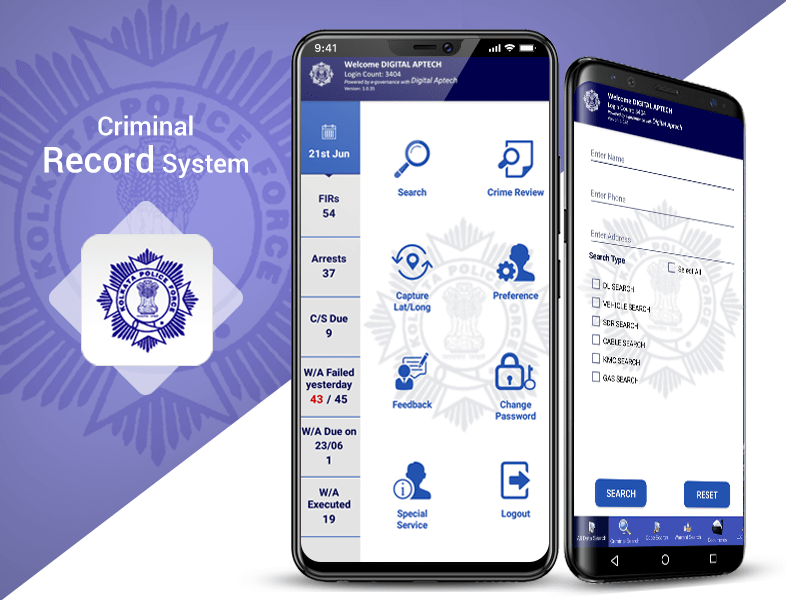
Kolkata Police
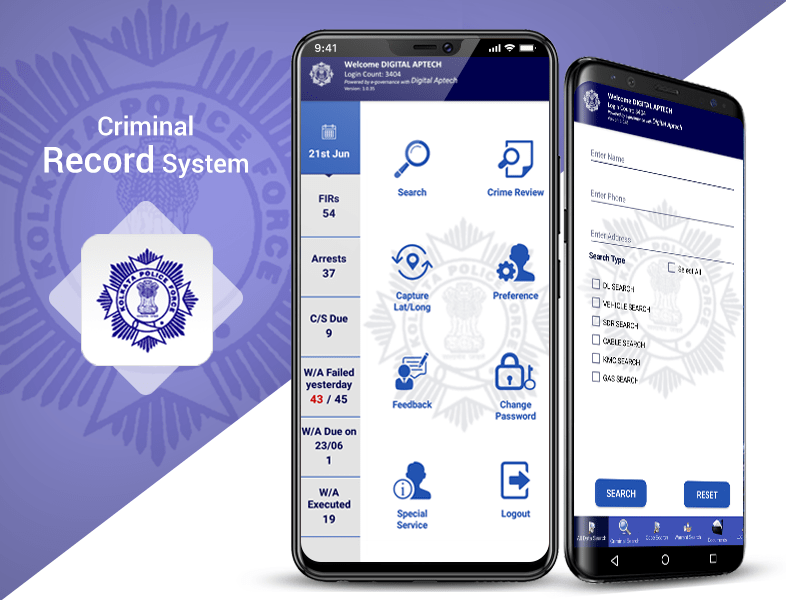
An umbrella platform where Kolkata Police personnel access crime and criminal records efficiently, with permissions granted according to designation.
Read the case study
CondosHQ
A Canada-based property listing platform for home buyers, with the functionality to find and compare property types across Greater Toronto.
Read the case study
Gateway Stream
What started as a hotel listing platform is now one of our longest-running clients, spanning e-commerce, hotel and event booking, food delivery and transport.
Read the case study
ISUZU
For ISUZU South Africa we rebuilt the website around a single coherent user journey, turning it into a highly functional experience that showcases the range clearly.
Read the case studyWhy Choose Digital Aptech's Mobile App Development Services
Digital Aptech ships apps built to survive annual OS releases, shifting store policies and users on older hardware.
- One codebase where it fits, native where it genuinely does not
- Store submission handled end to end for the first release
- Developer accounts and certificates in your company's name
Our Technology Expertise
Chosen per project rather than per habit. If your team already runs a stack confidently, that usually beats anything we would pick fresh.
Programming Languages:
TypeScript
Swift
Kotlin
Dart
JavaScript
Frameworks:
React NativeFlutter
Expo
SwiftUI
Jetpack Compose
Mobile Platforms:
iOS
Android
iPadOS
Wear OS
- MDM distribution
AI on Mobile:
Core ML
ML Kit
Whisper
OpenAI
- On-device vision
Databases:
SQLite
Realm
Firebase
Supabase
PostgreSQL
DevOps:
Fastlane
EAS
App Store Connect
Play Console
Sentry
Why Choose Digital Aptech?
Here is what differentiates Digital Aptech in delivering mobile app development for US and UK organizations.
Cross-Platform by Default
One codebase, one backlog, near-native performance and roughly 40 percent less to maintain. We tell you in writing when your project is one of the genuine exceptions.
Store Compliance Handled
Privacy nutrition labels, Play data safety, account deletion rules and subscription configuration checked before submission. Rejections are handled and resubmitted at no extra cost.
Tested on Real, Older Devices
Our device lab is weighted toward mid-range Android from two and three years ago, because that is what a large share of your users actually hold.
On-Device AI Where It Fits
Voice input, document and barcode scanning and vision running locally, so features work offline, cost nothing per use and no image leaves the device.
Proven Engineering Track Record
Backed by 1,700+ successful technology engagements and a 4.81 out of 5 client satisfaction rating, Digital Aptech delivers consistently across industries and project sizes.
Global, Multi-Industry Delivery
Organizations across 34+ countries and 22+ industries rely on Digital Aptech, with a US office in Glendora, California and delivery hours covering Pacific through GMT.
Structured, Risk-Controlled Implementation
Defined roadmaps, workflow assessments and phased delivery reduce downtime, remove bottlenecks and keep production environments stable through change.
Recognized for Technical Excellence
Forbes India Select 200, Clutch 1000, GoodFirms and multiple global industry awards recognize consistent delivery standards and service reliability.
What our clients have to say about us
Choosing the right development partner makes all the difference.
It was an excellent experience in every way. Moreover, the end product they delivered surpassed our expectations. Overall, the project was successful.
Steve McChesneyPresident, Walking Tours Inc.
Digital Aptech works fast and implements features without the client's request. The team has been friendly, responsive, and easy to work with and consistently addressed the client's questions and concerns.
Julian HooverOwner, Chord Sheet Pro
I have known and worked with the guys at Digital Aptech for about 10 years now and have always found them to be flexible and responsive.
Alex CliffordDirector, Logic Digital
Frequently Asked Questions
-
Cross-platform apps typically run $22,000 to $110,000, with most between $35,000 and $70,000. A dedicated senior mobile engineer is $4,400 a month, about £3,500. Maintenance from $1,450 a month, which is not optional on mobile in the way it can be on web.
-
A focused app is eight to twelve weeks. A consumer product with accounts, payments and content is four to six months. Add two to four weeks for first store submission, which we handle but which is not entirely within anyone's control.
-
Cross-platform for the large majority of projects: one codebase, one backlog, roughly 40 percent less to build and maintain. Native is the right call for heavy graphics, complex camera or sensor work, sustained background processing, or deep platform integration. We tell you which yours is during discovery, in writing.
-
Yes, end to end for the first release, including privacy labels, Play data safety, account deletion requirements, subscription configuration and screenshots. Then we document the process and hand you a pipeline your team can run.
-
You do. Apple and Google accounts, signing certificates and store listings are registered to your company from the start, not ours. This sounds obvious and is one of the most common problems we inherit from other agencies.
-
We handle the response and resubmission at no extra cost. Most rejections are privacy labels, account deletion or subscription rules, all of which we check against before we submit. Budget one to three weeks of calendar time for review either way.
-
Yes, and for field apps it should. We build local-first with a sync queue and conflict resolution you have signed off on, rather than last-write-wins, which is where most offline implementations quietly lose data.
-
Yes. Voice input, on-device document and barcode scanning, semantic search and in-context drafting. On-device where privacy or latency demands it, cloud where the model needs to be larger. That is a per-feature decision, not a platform bet.
-
Yes. Our device lab is deliberately weighted toward mid-range Android from two and three years ago, because that is what a large share of real users hold. Testing only on current flagships is how apps ship slow and battery-hungry.
-
Yes, as a tier on the maintenance plan. It makes sense for apps that are operationally critical, such as field or logistics tools. For most consumer apps, business-hours support with an escalation path is enough, and we will say so.
-
Yes. We start with a short code and release audit, tell you honestly what shape it is in, and propose either incremental work or a rebuild. Certificate and account recovery is often the first thing we untangle.
-
iOS and Android both ship annual releases that break things. The maintenance plan covers keeping the app compliant and functional through those cycles, which is the main reason mobile maintenance is not optional.
Still got questions? Talk to our team.
Your next step toward success starts here
Bring us the problem, not a finished spec. We will tell you honestly what it takes to build, what it costs, and whether something simpler would do the job.
Connect with Us. We reply within one business day.
- 01Free expert consultation
A feasibility review and an actionable plan at no cost, whether or not you go ahead with us.
- 02Complimentary technical project manager
Included on every engagement, so delivery does not become somebody's second job.
15+Years of experience